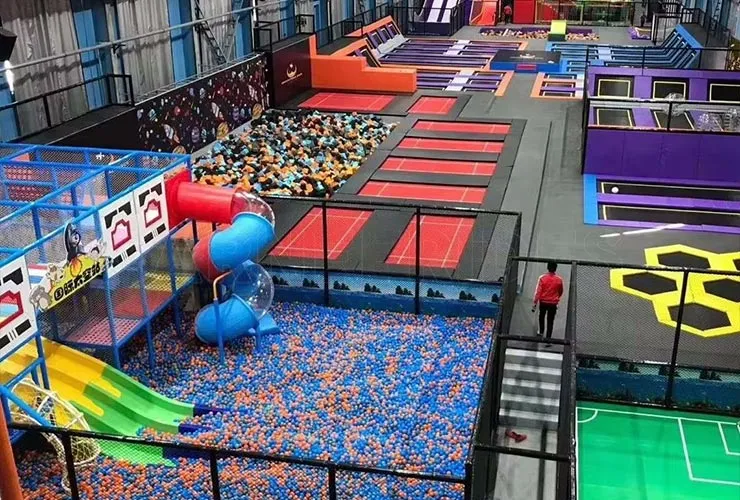
Childhood learning is not limited to classrooms, books, or structured lessons. Young children learn naturally through movement, exploration, experimentation, and imaginative experiences. This is why well-designed play environments can become valuable learning spaces. Soft Play Equipment provides children with opportunities to move their bodies, solve problems, interact with others, and create their own stories while enjoying an engaging play experience.
When carefully selected and arranged, play structures can support physical development alongside cognitive, social, emotional, and creative growth. For schools, childcare centers, family entertainment venues, and indoor play spaces, combining learning with play can create an environment where children remain active while developing important everyday skills.
Encouraging Learning Through Movement
Movement is one of the most natural ways children explore their surroundings. Climbing, crawling, balancing, jumping, and navigating different obstacles require children to make decisions and coordinate their movements. Soft Play Equipment can turn these activities into enjoyable learning experiences without making children feel as though they are completing a lesson.
For example, a climbing structure may encourage a child to determine which route is easiest to reach the top. An obstacle course can require children to crawl through tunnels, step across platforms, or move around barriers. Each activity encourages children to observe, plan, and respond to their surroundings.
Physical movement also supports gross motor development. Regular opportunities to practice balance, coordination, strength, and body control can help children become more confident in their physical abilities.
Supporting Problem-Solving Skills
Play environments often present children with small challenges that require independent thinking. Instead of simply following instructions, children can decide how they want to approach an activity.
A child facing a series of soft obstacles might ask, “Which way should I go?” or “How can I get across without touching the floor?” These simple questions encourage experimentation and decision-making.
Soft Play Equipment can therefore become a practical setting for developing problem-solving abilities. Children can try one approach, discover that it does not work, and attempt another. This process teaches persistence and helps children understand that challenges can have multiple solutions.
Building Creativity Through Imaginative Play
Creative play allows children to transform ordinary spaces into exciting worlds. A soft tunnel can become a secret passage, a climbing structure can turn into a mountain, and a small playhouse can become a shop, castle, or family home.
This flexibility gives children control over their play experiences. Rather than being restricted to one specific purpose, many types of Soft Play Equipment can become part of different imaginary scenarios.
Imaginative play also supports storytelling. Children may create characters, establish rules, and develop simple narratives while playing with friends. One day the same play area might become a space station, while the next day it could become an underwater kingdom.
Developing Social and Communication Skills
Play is often a shared experience, and children naturally communicate when they participate together. Soft play environments can encourage children to negotiate turns, share equipment, establish games, and cooperate to reach common goals.
For example, several children using an obstacle course may need to decide who goes first. Children playing pretend games may assign different roles to one another. These interactions create opportunities to practice communication and cooperation.
Such experiences can help children understand social boundaries and recognize the importance of listening to others. They also give children opportunities to express ideas and resolve small disagreements independently.
Encouraging Confidence and Independence
A thoughtfully designed play environment can allow children to explore challenges at their own pace. Successfully completing an activity can create a sense of accomplishment.
For a young child, climbing to a higher platform for the first time or completing an obstacle route can feel like a significant achievement. These small successes can encourage children to attempt new activities and become more comfortable with challenges.
Soft Play Equipment can support this process by providing age-appropriate activities with different levels of difficulty. Children can begin with simpler movements and gradually explore more challenging areas as their confidence grows.
Combining Physical Activity With Cognitive Development
Active play and mental development do not have to be separate experiences. Many physical activities require children to think while they move.
For instance, navigating a maze involves memory, observation, and decision-making. A themed play area can encourage children to identify colors, shapes, objects, or patterns. Number-based games can introduce basic counting concepts while children remain physically engaged.
This combination can make learning feel more natural. Instead of sitting still while receiving information, children interact directly with their environment and learn through experience.
Creating Opportunities for Open-Ended Play
Open-ended play is valuable because it does not always have one correct outcome. Children can use the same equipment in different ways depending on their interests and imagination.
A soft block, for example, might become a building material, a pretend vehicle, or part of an obstacle course. This type of flexibility encourages children to think creatively rather than simply complete a predetermined task.
When Soft Play Equipment is incorporated into an environment with open-ended activities, children can develop their own games and explore different possibilities. This can make the play experience more engaging because children have greater ownership over what they are doing.
Supporting Emotional Development
Children experience a wide range of emotions during play. They may feel excitement when trying something new, frustration when they cannot complete an activity, or happiness when they succeed.
These experiences provide natural opportunities to develop emotional awareness. Children learn to manage disappointment, wait for turns, ask for assistance, and celebrate achievements.
Play environments can also provide opportunities for quieter activities. After energetic movement, children may choose to sit, talk, observe others, or participate in imaginative activities. Having different types of spaces allows children to regulate their energy and choose activities that match their needs.
Designing Play Spaces for Different Learning Styles
Not every child approaches play in the same way. Some children enjoy climbing and physical challenges, while others prefer imaginative games, construction, or social activities.
A versatile play environment can include different forms of Soft Play Equipment to accommodate these preferences. Tunnels, steps, soft blocks, slides, climbing elements, interactive panels, and themed structures can provide a variety of experiences.
Combining different activities also helps children move between physical, creative, and social forms of play. This variety can keep the environment interesting and encourage children to explore unfamiliar activities.
The Importance of Thoughtful Layout
The educational value of play equipment depends partly on how the overall environment is organized. A well-planned layout should provide enough space for movement while making different activities easy to discover.
Clear pathways can help children navigate the environment, while separate areas can support different types of play. Active zones may encourage climbing and movement, whereas quieter areas can support imaginative or social activities.
Adults responsible for the environment should also consider age suitability, visibility, accessibility, durability, and appropriate safety measures when selecting and arranging equipment.
Encouraging Lifelong Positive Attitudes Toward Activity
One of the most important benefits of active childhood play is that it can help children associate movement with enjoyment. When physical activity is presented as a fun opportunity rather than an obligation, children may become more willing to participate.
Soft Play Equipment can make movement exciting by combining physical challenges with imagination and social interaction. Children are not simply exercising; they are exploring, pretending, competing, cooperating, and discovering new abilities.
This positive experience can contribute to healthier attitudes toward physical activity as children grow.
Conclusion
Soft play environments can provide much more than entertainment. With thoughtful planning, Soft Play Equipment can support active learning by encouraging movement, problem-solving, communication, creativity, confidence, and independent exploration.
The greatest strength of these environments is their ability to combine several forms of development within one enjoyable experience. Children can climb while making decisions, build while imagining, communicate while cooperating, and overcome challenges while developing confidence.
For schools, childcare facilities, indoor play centers, and family-oriented venues, creating play spaces that encourage both activity and creativity can give children valuable opportunities to learn naturally. When play is designed around exploration and discovery, every movement, challenge, and imaginative game can become part of a meaningful childhood learning experience.