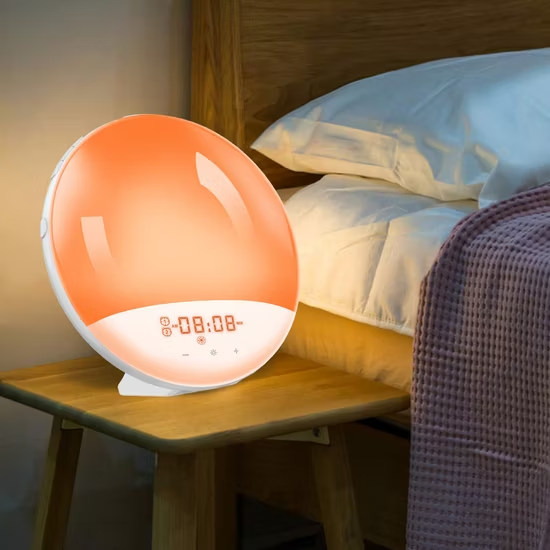
A consistent nighttime routine can make it easier to transition from a busy day into a more relaxing evening. While habits such as reducing screen time, keeping the bedroom comfortable, and following a regular bedtime are important, technology can also support better organization at night. A smart sleep clock is designed to combine timekeeping with features that can make bedtime, sleeping, and waking more convenient.
Unlike a traditional alarm clock, a smart sleep clock may offer customizable alarms, gradual wake-up lighting, sleep-friendly sounds, display controls, and other useful functions. These features can help create a calmer environment while encouraging a more consistent daily schedule.
What Is a Smart Sleep Clock?
A smart sleep clock is a connected or feature-rich clock designed specifically for the bedroom. Depending on the model, it can provide much more than the current time. Some devices combine an alarm clock with lighting, sound, scheduling, environmental information, and smart-home functions.
The goal is not simply to replace a conventional clock. Instead, a smart sleep clock can become part of a nighttime routine by providing helpful cues before bedtime and creating a more comfortable waking experience in the morning.
Because different models offer different capabilities, it is useful to consider which features actually match your lifestyle before choosing one.
Customizable Alarm Scheduling
One of the most useful features of a smart sleep clock is flexible alarm scheduling. Traditional alarms often provide only a basic time setting, while smart models may allow users to create different schedules for weekdays, weekends, or specific days.
This can be helpful for people whose routines change throughout the week. Instead of repeatedly adjusting the alarm manually, users can establish recurring schedules that fit their normal activities.
Some smart clocks may also provide multiple alarm profiles. For example, one alarm can be used for workdays while another can be configured for weekends. This makes the device easier to integrate into a consistent routine.
Gradual Wake-Up Lighting
Sudden alarms can feel unpleasant, particularly when they interrupt deep sleep. A smart sleep clock with gradual lighting can provide a gentler alternative.
Wake-up lighting typically increases brightness gradually before the scheduled alarm. The changing light can provide a natural-feeling cue that morning is approaching, allowing the user to wake more comfortably.
Some devices allow users to adjust the duration, brightness, and color characteristics of the light. This customization can make the experience more suitable for different bedrooms and personal preferences.
Bedtime Reminders
Going to bed at a consistent time can be challenging when evenings become busy. A smart sleep clock can help by providing bedtime reminders.
Instead of relying entirely on memory, users can configure notifications or visual cues that indicate when it is time to begin winding down. This can encourage a predictable sequence of activities, such as turning off entertainment, preparing for bed, reading, and relaxing.
A reminder does not guarantee better sleep, but it can make a regular schedule easier to maintain.
Sleep-Friendly Sounds
Another valuable feature is the ability to play calming sounds at bedtime. Depending on the device, available options may include white noise, nature sounds, rainfall, gentle ambient audio, or other relaxing soundscapes.
These sounds can help create a consistent audio environment. For people who are easily distracted by occasional household or outdoor noises, steady background audio may also make the bedroom feel more peaceful.
A smart sleep clock may allow users to set a timer so the sound gradually stops after a selected period. This can be useful for people who prefer background sound while falling asleep without leaving it playing all night.
Adjustable Display Brightness
A bright clock display can become distracting in a dark bedroom. For this reason, adjustable display brightness is an important feature when selecting a smart sleep clock.
Some models allow the display to dim automatically at night or turn off completely during designated hours. Others provide manual brightness controls so users can find a comfortable setting.
A dim display can make it easier to keep the bedroom dark while still allowing users to quickly check the time when necessary.
Night Mode and Screen Control
Night mode can further improve the bedroom experience by reducing unnecessary visual stimulation. Depending on the model, this feature may dim the display, change its appearance, or deactivate selected functions during sleeping hours.
This is particularly useful for people who want technology in the bedroom without having a bright screen constantly visible.
The ability to automate these settings also reduces the need to interact with the device after getting into bed.
Smart Home Integration
Some smart sleep clocks can work with other connected devices around the home. This may allow users to coordinate bedroom lighting, compatible speakers, thermostats, or other smart-home equipment.
For example, a nighttime routine might automatically lower compatible lights at bedtime and activate a relaxing setting. In the morning, the system could gradually increase lighting while the clock begins its wake-up sequence.
Smart-home compatibility can turn an individual clock into part of a larger automated routine.
Temperature and Environmental Information
Certain smart sleep clocks provide information about bedroom conditions, such as temperature or humidity. Although these measurements should not be treated as medical guidance, they can help users understand their sleeping environment.
If the bedroom regularly feels too warm, too cold, or uncomfortable, environmental information can encourage users to make practical adjustments.
Having this information available directly on the bedside device can also be more convenient than checking a phone.
Snooze and Wake-Up Controls
Snooze functionality remains important even on advanced alarm clocks. However, smart models may provide more customizable controls than conventional designs.
Users may be able to adjust the snooze duration or choose different wake-up behaviors. Some devices combine sound with light or other gradual signals, creating a more progressive morning routine.
For people who frequently press snooze, a structured wake-up experience may also encourage them to become more consistent about getting out of bed.
App-Based Personalization
Many smart sleep clocks offer companion applications that allow users to customize schedules and settings from a smartphone. This can make managing multiple alarms, sounds, lighting options, and routines easier.
App-based controls may also provide firmware updates or additional configuration options over time. However, users should consider whether they want a device that depends heavily on a smartphone or internet connection.
A simple interface can sometimes be more valuable than having dozens of complicated settings.
Creating a More Consistent Nighttime Routine
The biggest advantage of a smart sleep clock may not be any single feature. Instead, it is the ability to combine several functions into one predictable routine.
For example, a user could establish a sequence in which a bedtime reminder appears, bedroom lighting becomes softer, calming audio begins, and the clock enters a low-brightness night mode. In the morning, gradual lighting could start before a gentle alarm sounds.
Repeating the same sequence each night can make the transition from daytime activity to bedtime more structured.
Choosing the Right Features
Not everyone needs every smart feature. Before purchasing a smart sleep clock, consider your personal routine and focus on functions that genuinely provide value.
If waking up is the main challenge, gradual lighting and customizable alarms may be priorities. If evening relaxation is more important, bedtime reminders and calming sounds could be useful. For smart-home users, compatibility with existing devices may be a deciding factor.
Privacy, connectivity requirements, ease of use, display controls, sound quality, and physical design are also worth considering.
Conclusion
A smart sleep clock can offer more than convenient timekeeping. With features such as customizable alarms, gradual wake-up lighting, bedtime reminders, calming sounds, adjustable displays, night modes, and smart-home integration, it can become a practical part of a well-organized nighttime routine.
Technology alone cannot guarantee better sleep, but the right device can encourage consistency and reduce some of the small inconveniences associated with bedtime and waking. By selecting features that match your habits rather than simply choosing the model with the longest feature list, you can create a bedroom routine that feels more comfortable, predictable, and convenient.